Rohan Editor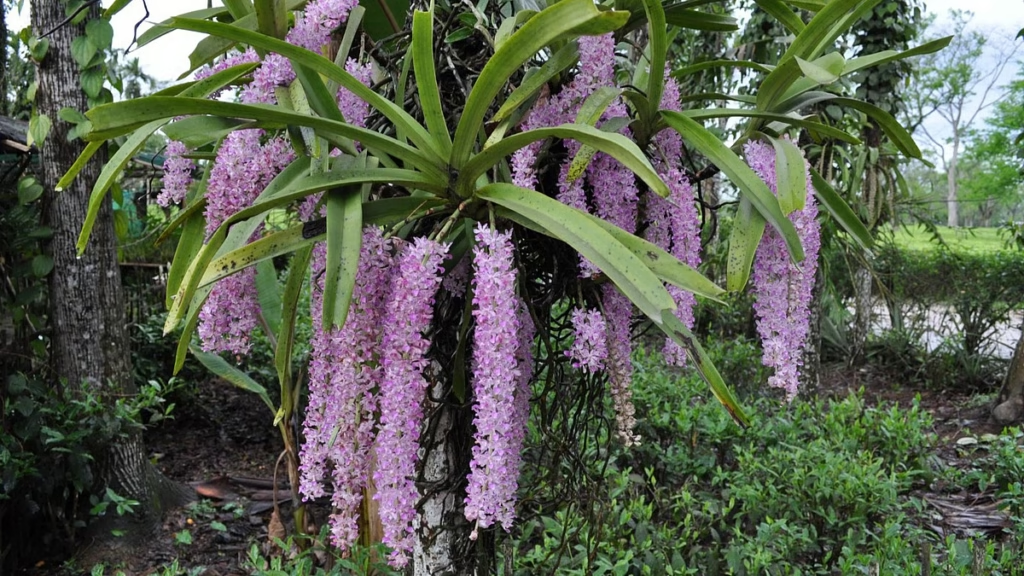
The Kopou Phool a cornerstone of Assamese cultural identity and the traditional Rongali Bihu festival, is facing a severe survival crisis due to the overlapping impacts of climate change and deforestation. For generations, the blooming of these orchids signaled the arrival of spring; however, shifting weather patterns and rising temperatures have caused the flowers to bloom prematurely. By the time Bihu celebrations begin in mid-April, many of the wild orchids have already withered, disrupting a centuries-old ecological rhythm. As an epiphyte that relies on specific host trees for survival, the Kopou is also disappearing alongside Assam’s shrinking forest cover, with scientists observing a gradual migration of the species toward cooler, higher altitudes in neighboring Arunachal Pradesh.
Beyond environmental shifts, the species is under intense pressure from large-scale commercial exploitation and illegal trading. During the Bihu season, massive quantities of Kopou are harvested from their natural habitats to meet market demand, a practice that has significantly depleted wild populations. Despite its status as the state flower and protection under the Wildlife Protection Act, enforcement remains weak, and there is a lack of species-specific conservation frameworks. Experts warn that without immediate intervention—such as promoting home-garden cultivation and strengthening legal protections for orchid habitats—this “spirit of spring” may soon be replaced by plastic imitations, signaling a profound loss for both the region’s biodiversity and its cultural he
About The Author