paromita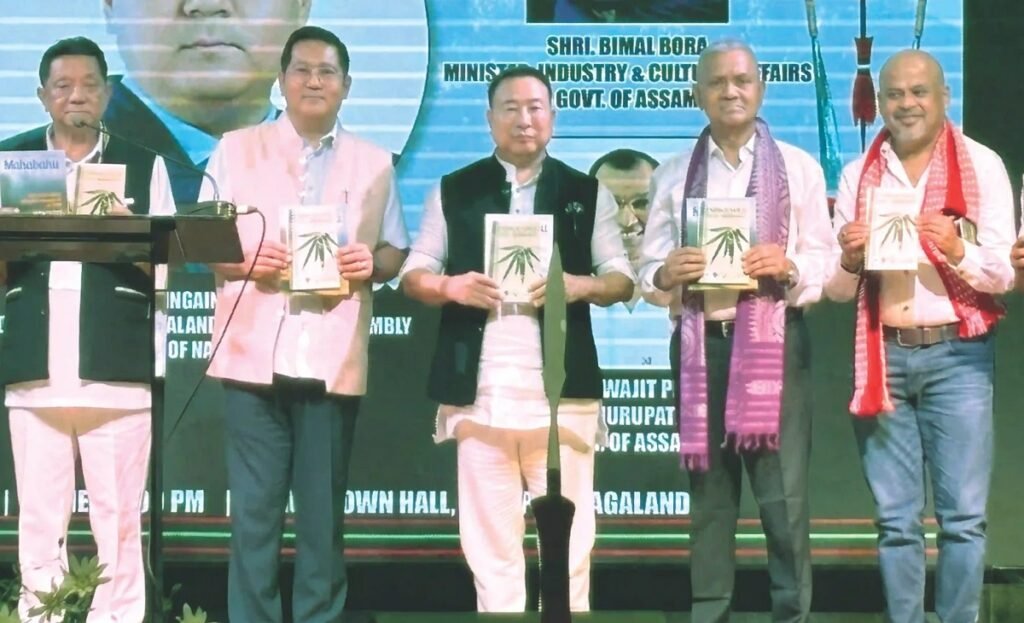
Nagaland Legislative Assembly Speaker Sharingain Longkumer and MLA and Advisor Kuzholuzo Neinu on Sunday called for stronger efforts to preserve indigenous identity, protect traditional institutions and safeguard the rights, culture, land and way of life of indigenous communities.The leaders made the call as Nagaland joined the global observance of the International Day of the World’s Indigenous Peoples.Speaking at a programme organised to mark the occasion, Longkumer said the recognition of indigenous peoples by the United Nations was an important milestone, but stressed that recognition by itself was not enough to ensure the survival of indigenous cultures and institutions. “Recognition alone will not suffice. To persevere and to preserve is our work,” Longkumer said, highlighting the responsibility of indigenous communities to protect their heritage, institutions and identity for future generations. The 2026 observance was held under the theme “Honoring Indigenous Midwives: Safeguarding Life and Well-being,” drawing attention to the important role played by traditional birth attendants in indigenous societies. For generations, indigenous midwives have provided maternal and newborn care within their communities, often with limited resources and relying on knowledge passed down through generations. Paying tribute to indigenous midwives, Longkumer said their contribution went beyond being a profession or traditional practice. He described their work as a “sacred calling” and said they had stood at the threshold of life with courage, compassion and dedication while assisting countless mothers and newborns. Longkumer also shared his personal connection with the theme, saying he was the grandson of a midwife. He used the occasion to honour his grandmother and pay tribute to indigenous midwives across the world for their contribution to communities.
The Speaker also drew attention to the cultural diversity of Northeast India, which is home to hundreds of ethnolinguistically diverse indigenous communities. These communities have their own languages, traditions, customary laws, festivals, social practices and worldviews that have developed over generations. “This extraordinary diversity is not a weakness, but our greatest strength,” Longkumer said, describing the region’s diversity as a living testament to India’s pluralistic heritage. He stressed that indigenous identity should remain an important part of the development process in Nagaland, the Northeast and the country as a whole. Referring to the national aspiration of Viksit Bharat@2047, Longkumer said Nagaland and the wider Northeast were active participants in India’s development journey. At the same time, he cautioned against adopting uniform models of development without taking into account the sensitivities, traditions and distinct requirements of indigenous communities. He said development and modernisation should move forward without weakening the cultural foundations and traditional institutions that define indigenous societies.
Longkumer also referred to the rapid generational and technological changes taking place across the country. He pointed to the emergence of Generation Z, Generation Alpha and the generations that will follow, alongside the growing influence of artificial intelligence and other digital technologies.With India working towards its development goals for 2047, the Speaker said the coming years would be important in determining how indigenous communities and their institutions respond to technological, social and economic changes.He said the next 14 years would be particularly significant in shaping the future of indigenous institutions and communities, underlining the need to ensure that progress does not come at the cost of identity. The observance highlighted the wider need to balance development with the preservation of traditional knowledge, cultural practices and indigenous institutions, while ensuring that the rights and interests of indigenous communities remain protected amid rapid social and technological change.
About The Author