From Chai to Corridors Assam’s Quiet Economic Transformation Deserves National Attention
 Rohan Editor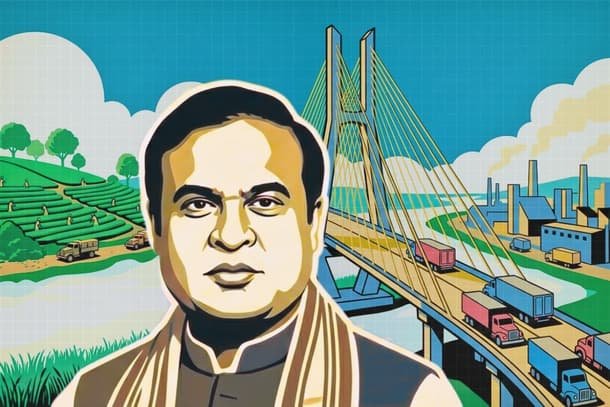
Assam is undergoing a profound structural shift, moving beyond its traditional identity as a tea-and-oil economy toward becoming a pivotal multi-modal logistics hub for Southeast Asia. Under the current administration, the state has seen a massive surge in infrastructure spending, specifically targeting “bottleneck” regions to streamline the movement of goods. The development of the Jogighopa Multi-Modal Logistics Park and the expansion of the National Waterways along the Brahmaputra are central to this transformation. These projects are designed to integrate Assam into the Global Value Chain by linking its burgeoning manufacturing sectors—such as food processing and organic chemicals—directly to markets in Bangladesh, Bhutan, and the ASEAN nations.
This economic evolution is characterized by a “quiet” but steady increase in Ease of Doing Business rankings and a significant push for digital connectivity in rural belts. By diversifying its economic base, the state is successfully attracting private investment in sectors like semiconductor assembly and renewable energy, which were previously absent from the region’s industrial portfolio. The focus has shifted from mere extraction to value addition, ensuring that the wealth generated from the state’s natural resources stays within the local economy. As the “Act East” policy matures, Assam’s transition from a frontier state to an economic gateway represents a strategic success story that highlights the potential of regional hubs to drive India’s next phase of national growth.
About The Author