New Publications Celebrate Indigenous Heritage: “Nagas: The Knowledge Practitioners” and “Naga Textiles: Threads that Weave Stories” Released
 nanika
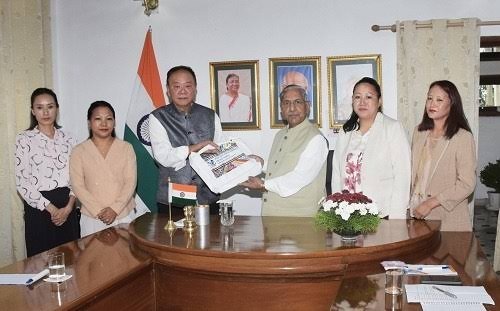
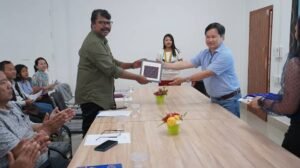
Nagaland Governor and North East Zone Cultural Centre Chairman Nand Kishore Yadav recently emphasized the critical importance of rigorous cultural documentation to establish accessible records for researchers, students, artisans, museums, and future generations during the release of two pivotal books on indigenous heritage at the NEZCC headquarters. The newly launched publications—”Nagas: The Knowledge Practitioners” by Alok Kumar Kanungo and Alino Sumi, alongside “Naga Textiles: Threads that Weave Stories” by Padma Shri awardee Sentila T. Yanger—explore rich traditional knowledge systems while highlighting that culture is a living, evolving body of knowledge created, refined, and transmitted across generations rather than just a passive legacy. Governor Yadav stressed that indigenous knowledge must be documented with utmost sensitivity to respect community identity, ownership, dignity, and intellectual rights, viewing traditional practices not merely as folklore but as sophisticated systems developed through observation, experimentation, and ecological adaptation. Highlighting the contents of the books, he noted that traditional technologies, subsistence methods, and nature-based belief systems detailed in the first volume offer valuable insights into contemporary challenges like biodiversity conservation and climate change, while the second volume describes Naga shawls as a complex visual language where colors, motifs, and weaving techniques communicate deep social meanings and historical memory. Cautioning against cultural amnesia in an era of rapid technological advancement, the Governor urged youth to embrace modernity without abandoning their cultural roots, encouraging universities and institutions to spearhead village-level research into oral traditions, customary institutions, indigenous medicine, and material culture before valuable knowledge is lost. Co-author Alino Sumi explained that their book intentionally moves away from outdated colonial tropes focused on headhunting to document indigenous technologies like Chakhesang trapping methods, Pochury salt-making, and Lotha and Sumi community fishing, while author Sentila T. Yanger described her work as a living archive capturing textile narratives from fifteen distinct Naga communities. The engaging event, which featured a welcome address by NEZCC director Alobo Naga and vibrant cultural performances by children and local community groups, underscored a collective regional commitment to preserving, celebrating, and sustaining indigenous heritage for posterity.
About The Author