Data Discrepancies Doom Defense Gauhati High Court Rejects Lineage Claim of Assam Laborer Over Conflicting Records
 Rohan Editor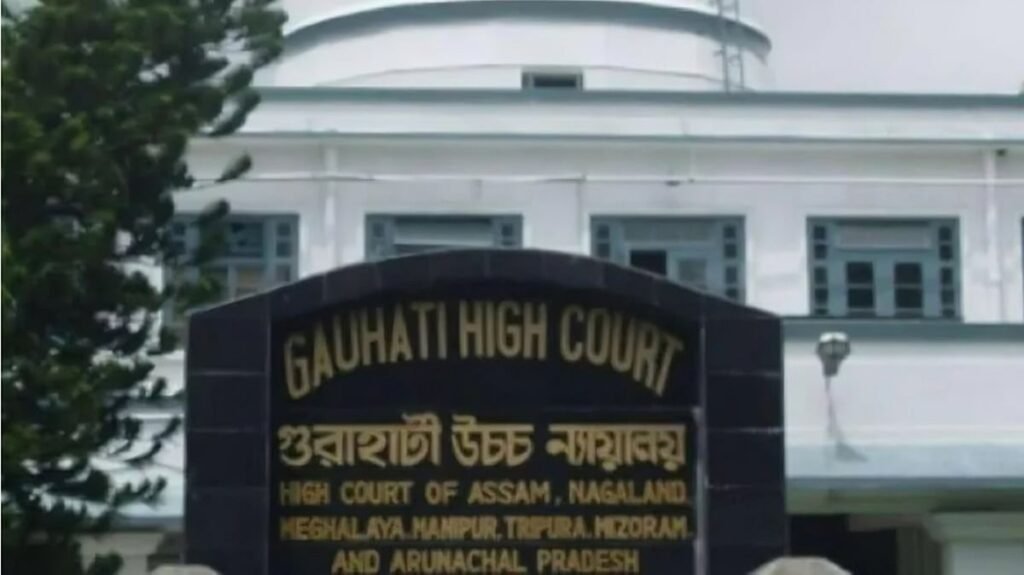
The Gauhati High Court has upheld a Foreigners’ Tribunal order declaring a daily-wage laborer a foreigner, ruling that the submission of 15 separate official documents failed to legally discharge the burden of proof required under Section 9 of the Foreigners Act, 1946. A division bench comprising Justices Kalyan Rai Surana and Shamima Jahan emphasized that a heavy volume of paperwork does not compensate for fatal structural inconsistencies. The petitioner had attempted to establish Indian citizenship by tracing his lineage back to the 1951 National Register of Citizens (NRC) in Charai Khasara village, alongside presenting common identity markers such as a school certificate, a PAN card, and an Elector’s Photo Identity Card (EPIC). However, the court ruled that oral testimony and standard civic cards function as proof of residence or identity rather than conclusive evidence of constitutional citizenship.
The judicial blow to the petitioner’s defense stemmed from major discrepancies uncovered across his historical family records. A review of a 1979 voter list revealed that multiple names could not be verified as actual family members, alongside massive age contradictions where an individual recorded as 25 years old in 1979 suddenly appeared as 29 years old in 1989. Most critically, the family’s names were found scattered across three separate villages—Dhobakura, Ghugudoba, and Hashdoba—which the tribunal and High Court determined were indicative of three completely distinct family units rather than a single ancestral line. While the petitioner’s counsel argued that minor spelling variations and a lack of certified computer-generated NRC printouts should be dismissed as technicalities, the court maintained that the structural inconsistencies failed to definitively prove a continuous link to ancestors residing in India before the statutory January 1, 1966 baseline.
About The Author